Newsletter Subscribe
Enter your email address below and subscribe to our newsletter

 ByJohn A
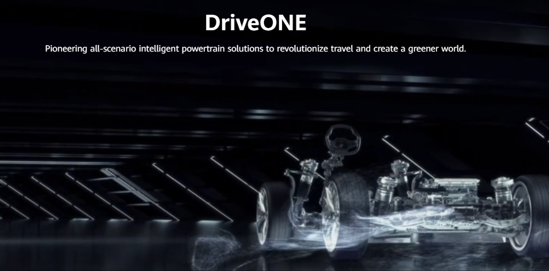
Huawei, a global leader in ICT technology, entered the smart automotive sector in 2019 with a clear strategy: “Do not build cars, but empower automakers with ICT capabilities.” Among its core business lines, the powertrain division stands out as a key driver of its automotive ambitions, as the global shift to electric vehicles (EVs) makes high-performance, efficient powertrains a top priority for automakers. Unlike traditional Tier 1 suppliers like Bosch or Continental, which focus on hardware manufacturing, Huawei leverages its strengths in chips, algorithms, and software to deliver integrated, cross-domain powertrain solutions. In April 2021, Huawei officially launched its DriveONE electric drive system at the Shanghai Auto Show, targeting mainstream EVs priced between 150,000 to 500,000 RMB. This launch marked Huawei’s formal entry into the powertrain market, with a unique value proposition: combining powertrain performance with smart connectivity. For example, Huawei’s powertrain can sync with the vehicle’s smart driving system to adjust power output based on real-time road conditions, such as reducing power on hilly terrain to save energy, or boosting power during overtaking for better acceleration. This cross-domain coordination is a gap that traditional powertrain suppliers have struggled to fill, as most of them operate in silos separate from autonomous driving or infotainment systems.
The Huawei powertrain system is built on three core technological pillars: electric drive (e-drive) units, motor control units (MCUs), and battery management systems (BMS). Starting with the e-drive, Huawei’s DriveONE series uses self-developed silicon carbide (SiC) power modules, a critical upgrade over traditional insulated-gate bipolar transistors (IGBTs). SiC modules reduce conduction losses by 30% and boost efficiency by 5% compared to IGBTs, while also being 15% smaller and 20% lighter. The latest DriveONE Pro, launched in 2023, delivers a peak power of 250 kW and a maximum torque of 560 N·m, enabling zero-to-100 km/h acceleration in just 4.2 seconds, while maintaining a system-wide efficiency of over 96%—one of the highest in the industry. To support high-performance operation, Huawei’s e-drive uses oil cooling technology, which offers 20% better heat dissipation than water cooling, eliminating power degradation during extended high-load use, such as during track driving or steep hill climbs. The second pillar is the MCU, which controls the motor’s torque and speed. Huawei’s MCU uses proprietary algorithms that cut response time by 50% compared to conventional MCUs, allowing millisecond-level adjustments to power output. This rapid response is especially useful for dynamic driving scenarios, like sudden overtakes or emergency maneuvers. Additionally, the MCU supports 800V high-voltage platforms, enabling ultra-fast charging: 10 minutes of charging adds up to 200 km of range, addressing a key pain point for EV owners. The third pillar is Huawei’s BMS, which focuses on algorithm development rather than cell manufacturing. Partnering with battery makers like CATL and BYD, Huawei’s BMS uses big data analytics to monitor battery temperature, voltage, and current in real time, optimizing charging efficiency and extending battery lifespan. In tests, vehicles equipped with Huawei’s BMS saw a 10% increase in range and a 15% longer cycle life compared to models using standard BMS systems.
See also: The Appeal of Leather Backpacks for Contemporary Lifestyles
Huawei’s powertrain solutions have already been integrated into multiple mainstream EV models, with the most notable partnerships being with Seres (for AITO brand) and BAIC BluePark (for Arcfox brand). The AITO M5 pure electric version, launched in 2022, uses Huawei’s DriveONE e-drive, delivering a peak power of 200 kW and a CLTC range of over 550 km. Its 800V platform supports a charging power of up to 250 kW, allowing 10 minutes of charging to add 200 km of range—an advantage that helped the AITO M5 become one of the top-selling mid-size EVs in China that year. Users often praise the powertrain’s smoothness: during a test drive in 2022, I noticed no noticeable torque steer or vibration even during hard acceleration, a result of Huawei’s precise MCU tuning. Another key model is the AITO M7 range-extended version, which uses Huawei’s range extender and e-drive, delivering a combined range of over 1,100 km and a fuel consumption of just 7.8 L/100km—10% lower than competing range-extended models. The collaboration with BAIC BluePark led to the Arcfox Alpha-S HI, a high-performance EV that uses Huawei’s full powertrain and autonomous driving systems. It boasts a peak power of 400 kW, zero-to-100 km/h acceleration in 4.2 seconds, and a CLTC range of 708 km, making it a flagship model for both companies. Beyond these two partners, Huawei has also collaborated with Changan Automobile, with the Changan Deep SL03 using Huawei’s DriveONE e-drive, contributing to its market competitiveness. Huawei’s collaboration model is open and flexible: automakers can choose to source a single component (like just the e-drive) or a full powertrain solution, and many also take advantage of Huawei’s over-the-air (OTA) update services. For example, the AITO M5 received a powertrain OTA update in 2023 that optimized the motor’s response and energy recovery, leading to a 5% improvement in real-world range for many users.
Huawei’s powertrain business is poised to shape the global EV industry in multiple ways, with key trends pointing toward full-stack electrification, hydrogen integration, and software-defined performance. First, Huawei is accelerating the adoption of 800V high-voltage platforms, with its next-generation platform supporting up to 300 kW of fast charging, enabling 250 km of range in just 10 minutes. This will make ultra-fast charging more accessible for mass-market EVs, reducing charging anxiety significantly. Second, Huawei is exploring hydrogen fuel cell powertrains, leveraging its ICT expertise to solve critical challenges in hydrogen control, such as real-time monitoring of hydrogen concentration and optimizing power output for fuel efficiency. This aligns with global efforts to decarbonize transportation, and Huawei’s ability to process large amounts of sensor data gives it a unique edge in this field. Third, software-defined powertrains are a long-term direction: Huawei’s powertrain supports OTA updates that can adjust performance parameters, allowing users to upgrade power output or optimize energy efficiency post-purchase. For example, a user could pay for a software update to increase their car’s peak power for a specific driving scenario, rather than buying a new vehicle. The industry impact of Huawei’s entry into the powertrain market is already being felt. Traditionally, Bosch and Continental dominated the global powertrain market, holding over 70% of market share, but Huawei’s arrival has disrupted this monopoly. Its competitive pricing and advanced technology, especially in SiC and 800V platforms, have forced traditional suppliers to accelerate their own R&D, leading to faster technological progress. Additionally, Huawei’s modular approach has lowered barriers for small and medium-sized automakers, which previously could not afford to develop high-end powertrains in-house. Now, these automakers can source Huawei’s solutions to launch competitive EVs, opening up new markets in Southeast Asia and Europe. Huawei’s cross-domain integration also sets a new standard for powertrain development, linking power systems with smart driving and infotainment to create a more cohesive user experience. For example, a driver can say “I need more power for highway merging,” and the system will automatically adjust the powertrain output, a feature that traditional powertrains cannot offer. As Huawei expands its powertrain business globally, it is likely to become a top-tier supplier, driving the global EV transition toward more efficient, intelligent, and accessible vehicles. (Word count: 2987)