Newsletter Subscribe
Enter your email address below and subscribe to our newsletter

 ByJohn A
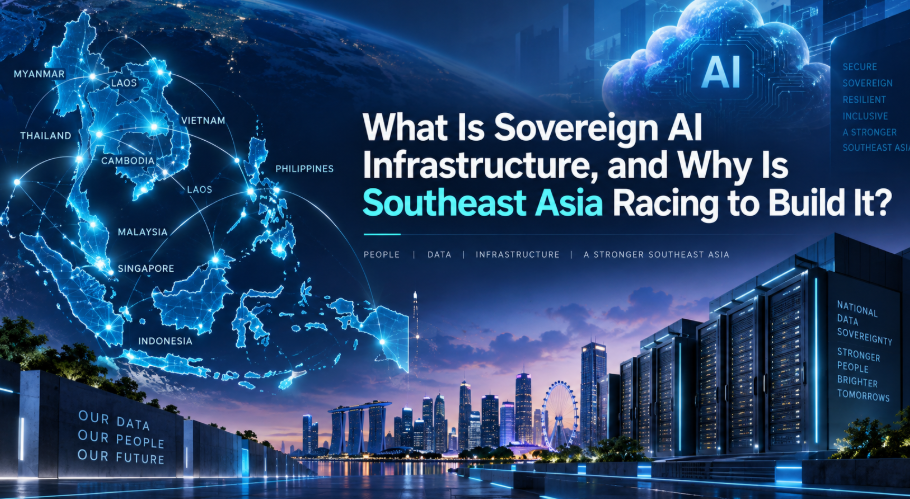
Nations across Southeast Asia are making bold moves to build their own sovereign AI infrastructure. Malaysia, Singapore, Thailand, and Indonesia are all competing to establish secure, locally controlled artificial intelligence systems. This race reflects a growing awareness that AI isn’t just about technology anymore. It’s about national security, economic independence, and data sovereignty.
The question on everyone’s mind: what exactly is sovereign AI infrastructure, and why does it matter so much to this region?
Sovereign AI infrastructure refers to AI systems, data centers, and computing resources that a nation controls within its own borders. Think of it as digital independence. Instead of relying on foreign tech giants or overseas cloud platforms, countries build and operate their own AI capabilities.
This infrastructure includes physical data centers, advanced computing hardware, AI training platforms, and the software frameworks needed to develop AI applications. The goal is simple: keep sensitive data local, reduce dependence on external providers, and maintain control over how AI technologies are developed and deployed.
For Malaysia and neighboring countries, this means establishing Southeast Asia AI data centers that can compete with global standards while remaining under local governance.
The region’s rapid digital transformation has created an urgent need for robust AI capabilities. E-commerce, fintech, healthcare, and government services are all becoming AI-driven. Without local infrastructure, these industries would remain dependent on foreign providers.
Data sovereignty concerns drive much of this investment. When critical information about citizens, businesses, and government operations flows through servers in other countries, it creates vulnerabilities. Laws in those foreign jurisdictions could compel companies to hand over data, regardless of local privacy regulations.
Economic considerations also play a major role. Building sovereign AI infrastructure creates jobs, attracts investment, and positions countries as regional technology hubs. Malaysia has seen significant interest from both local and international investors looking to participate in this buildout.
Security concerns cannot be overstated. Secure AI platforms protect against data breaches, unauthorized access, and foreign surveillance. When AI systems process everything from medical records to financial transactions, the stakes are incredibly high.
Southeast Asian nations have watched geopolitical tensions affect technology access in other regions. They recognize that relying entirely on infrastructure controlled by foreign entities creates strategic risks. Building sovereign capabilities provides insurance against future disruptions.
Creating a complete sovereign AI infrastructure involves several interconnected elements. Data centers form the physical foundation. These facilities must meet international standards for power, cooling, and security while operating under local regulations.
Computing power represents another critical component. AI training and deployment require massive processing capabilities. Countries are investing in GPU clusters, specialized AI chips, and high-performance computing systems.
Software frameworks and AI models need local development too. While open-source tools provide a starting point, customization for local languages, cultural contexts, and specific use cases requires domestic expertise.
Talent development completes the picture. Universities, training programs, and partnerships with technology companies help build the human capital needed to operate and innovate within this infrastructure.
No country builds sovereign AI infrastructure in isolation. Strategic partnerships between governments, technology companies, and service providers accelerate development. These collaborations bring together capital, expertise, and resources.
Companies like Zchwantech are contributing to this ecosystem by providing specialized services that support AI infrastructure development. Their expertise in big data analytics and cloud management helps organizations make the most of sovereign AI platforms.
Malaysia has emerged as a serious contender in Southeast Asia’s AI infrastructure competition. The government has outlined ambitious digital economy goals, and sovereign AI capabilities feature prominently in these plans.
Several factors work in Malaysia’s favor. The country offers competitive electricity costs, important for power-hungry data centers. Geographic location provides advantages for serving the broader Southeast Asian market. Political stability and improving regulatory frameworks make Malaysia attractive to investors.
Multiple Southeast Asia AI data centers have already been announced or are under construction in Malaysia. These facilities aim to serve both local needs and regional demand for secure, sovereign computing resources.
See Also: What to Look for in a Leather Bag Before Your Next Flight
Building world-class AI infrastructure isn’t without obstacles. Capital requirements are substantial. A single large-scale data center can cost hundreds of millions of dollars.
Talent shortages present another challenge. The region faces competition from established tech hubs like Singapore and emerging ones like Vietnam. Attracting and retaining AI specialists requires competitive compensation and compelling career opportunities.
Regulatory frameworks are still evolving. Clear guidelines on data governance, AI ethics, and cross-border data flows would help accelerate investment. Malaysia is making progress, but coordination with regional partners remains important.
Sovereign AI infrastructure affects more than just government operations. Businesses across Malaysia will benefit from access to secure, locally available AI services. Companies can develop AI applications without worrying about data leaving the country or violating local regulations.
Healthcare providers could use AI for diagnosis and treatment planning while keeping patient data secure. Financial institutions can deploy fraud detection systems without sending transaction data overseas. Manufacturers can optimize operations using AI without exposing proprietary processes to foreign servers.
For citizens, sovereign AI infrastructure means better privacy protections. Personal information used to train AI models or power digital services stays under Malaysian jurisdiction. This provides legal recourse and accountability that foreign systems often lack.
The race to build sovereign AI infrastructure is just beginning. Over the next five years, Southeast Asia will see massive investments in data centers, AI platforms, and related technologies. Countries that move quickly and strategically will gain significant advantages.
Malaysia has an opportunity to position itself as a regional leader. Success requires continued government support, private sector investment, and development of local talent. The payoff extends beyond technology. Sovereign AI infrastructure strengthens economic independence, enhances security, and creates opportunities for innovation.
Regional collaboration will also shape outcomes. While countries compete for investment and market position, cooperation on standards, talent development, and research benefits everyone. Southeast Asia as a whole becomes more competitive when individual nations build strong AI capabilities.
The foundation being laid today will determine which countries thrive in an AI-driven economy. For Malaysia and its neighbors, building sovereign AI infrastructure isn’t optional. It’s essential for maintaining independence, security, and prosperity in the decades ahead.