
You can see the strain in small moments. A toothbrush slips. A toothpaste cap will not turn. Floss feels impossible. What used to take two minutes now takes patience, hand strength, and a lot of quiet frustration. If you are helping a parent, spouse, or another loved one with arthritis, daily mouth care can turn into one more task that leaves both of you tired. For those seeking family-focused dental care in Antioch, these challenges can feel even more urgent to address with compassionate support.
The hard part is that skipping oral care does not stay small for long. Sore gums, plaque buildup, dry mouth, and painful chewing can follow, and those problems can affect eating, sleep, and confidence. The good news is that a few practical changes can make brushing and flossing less painful and more manageable. That is the heart of 5 Ways To Make Oral Care Easier For A Relative With Arthritis, and most of them can start today.
Arthritis changes oral care in ways other people often miss
Arthritis does not just make hands ache. It can reduce grip strength, limit wrist movement, and make fine motor tasks feel clumsy. That matters when someone needs to hold a toothbrush at the right angle, squeeze a tube, guide floss between teeth, or clean dentures without dropping them.
There is also the emotional side. A relative who has always handled their own routines may feel embarrassed needing help with something this personal. You may be trying to offer support without sounding pushy. That tension can lead to avoidance. One skipped night becomes a week of rushed brushing, and then a small problem turns into gum irritation or tooth pain.
Older adults also face a higher risk of dry mouth, often from medicines, which can raise the risk of cavities and mouth infections. The National Institute on Aging offers practical guidance on taking care of your teeth and mouth, including the link between daily care, dry mouth, and overall comfort.
Simple tools often matter more than effort
When a relative struggles with oral hygiene, people often assume they need more reminders. Most of the time, they need less pain and less strain. The first fix is usually adapting the tools.
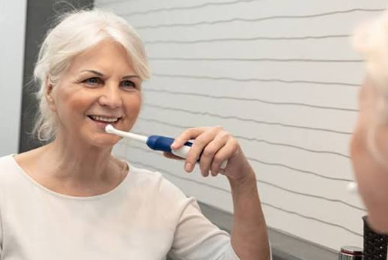
An electric toothbrush can do a lot of the work that sore fingers and stiff wrists can no longer do well. A larger handle is easier to hold, and some people do better if you add a bicycle grip or soft foam tube to make the handle thicker. Toothpaste pumps can replace hard-to-squeeze tubes. Floss holders can help when wrapping floss around the fingers hurts.
This is one of the most useful tips for easier brushing with arthritis. Do not ask painful joints to force a routine that no longer fits. Change the routine so it fits the joints.
Five practical ways to make dental care easier for seniors with arthritis
1. Switch to an electric toothbrush with a wide grip. A powered brush reduces the back and forth motion that can hurt the hand and wrist. Choose a model with a thick handle or add a grip sleeve for comfort.
2. Use floss picks, interdental brushes, or a water flosser. Traditional floss can be hard to control. The National Institute of Dental and Craniofacial Research shares helpful flossing information for caregivers that can make this step feel less awkward and more realistic.
3. Set up the bathroom for stability and ease. Keep supplies within easy reach, use good lighting, and place a chair near the sink if standing causes fatigue. A mirror that does not require leaning forward can help too.
4. Work around pain patterns. Many people with arthritis have better hand movement at certain times of day, often after a warm shower or after medicine has started working. Brushing when the hands are looser can prevent a lot of frustration.
5. Ask the family dentist about adaptive options. A family dentist can recommend special handles, dry mouth products, fluoride support, and cleaning methods that match your relative’s limits. The right advice can prevent a cycle where discomfort leads to less cleaning, which then leads to more dental treatment later.
Small adjustments at home can prevent bigger problems later
When oral care gets harder, it is tempting to settle for “good enough.” That can work for a day or two, but not as a long term plan. Plaque does not care that someone has swollen knuckles. Gums still become inflamed, and food still gets trapped where fingers cannot manage floss.
The Centers for Disease Control and Prevention shares clear oral health tips for adults, including brushing twice a day with fluoride toothpaste, cleaning between teeth, and keeping up with dental visits. Those basics do not change. The method sometimes has to.
| Oral Care Task | Standard Option | Arthritis Friendly Option | Why It Helps |
| Brushing | Manual toothbrush | Electric toothbrush with enlarged handle | Less wrist motion and less grip pressure |
| Toothpaste use | Squeeze tube with twist cap | Flip top or pump dispenser | Easier for stiff fingers to open and use |
| Flossing | String floss | Floss holder, floss picks, or water flosser | Reduces finger strain and fine motor demands |
| Mouth comfort | Ignoring dryness | Dry mouth rinse or dentist recommended products | Helps protect teeth and soft tissues |
| Routine timing | Any available moment | Brush when joints are least stiff | Makes the routine more doable and less painful |
Three steps you can take today
Build a simpler setup. Put all oral care items in one easy to reach spot, replace hard to open products, and test an electric toothbrush or floss holder. The goal is fewer motions and less strain.
Watch one full routine without correcting every detail. You will learn where the real barrier is. It may not be brushing at all. It may be opening the toothpaste, gripping the brush, or standing long enough to finish.
Schedule preventive dental care before pain starts. If your relative is already struggling with oral care for a relative with arthritis, a checkup can catch gum irritation, dry mouth, or early decay before those issues become harder and more expensive to treat.
Support matters as much as the tools
Your relative is not being lazy, and you are not overreacting. Arthritis can turn basic oral hygiene into a daily obstacle, especially when pride and pain show up together. A few smart changes can restore comfort, protect teeth, and make the whole routine feel less heavy.
If you need guidance, reach out to a family dentist who can suggest the right tools and a realistic care plan for your loved one’s needs.