Newsletter Subscribe
Enter your email address below and subscribe to our newsletter

 ByJohn A
Deep sea wahoo fishing in Los Sueños takes anglers into offshore Pacific waters where fast-moving predators gather around temperature changes, current edges, bait concentrations, and deeper structure. Wahoo are among the fastest predatory fish in the ocean, and their sudden strikes make them a very different target from slower-moving bottom species.
The waters outside Los Sueños Marina provide access to the Central Pacific drop-off, where offshore charters can target wahoo alongside dorado, yellowfin tuna, sailfish, and marlin. Dedicated wahoo trips are generally planned as full-day offshore outings because productive areas can be well offshore and the fishing strategy depends heavily on finding the right water conditions.
For anglers planning a targeted trip, deep sea wahoo fishing Los Suenos provides information about the species, seasonal patterns, tackle, and fishing methods used from the marina.
Wahoo combine speed, aggressive feeding behavior, and sharp teeth. These characteristics influence nearly every part of the fishing setup, from lure presentation to leader selection and the way the crew responds after a strike.
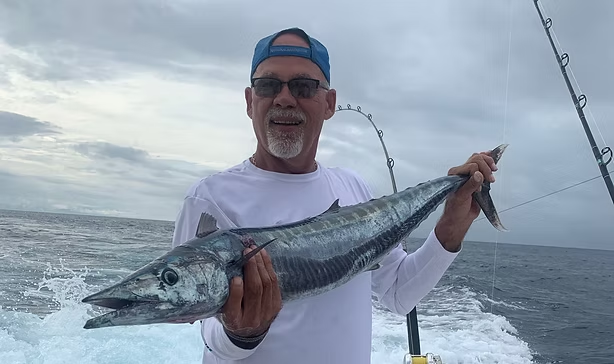
Wahoo have a streamlined, torpedo-shaped body designed for rapid acceleration. The fish can reach speeds of up to 60 mph and often attack baitfish at high velocity. This creates extremely fast strikes that can put immediate pressure on the rod and reel.
Their hunting behavior also explains why fast trolling works so well. Rather than slowly following a lure, wahoo often respond to a fast-moving presentation that resembles fleeing prey.
Wahoo have serrated teeth capable of cutting through conventional fishing line. A standard monofilament or fluorocarbon leader can be vulnerable during a direct strike.
Wire leaders are therefore a critical part of a dedicated wahoo setup. They provide protection between the fish and the main line while allowing the lure or bait to remain properly presented.
A wahoo strike can happen without much warning. The rod can load suddenly as the fish attacks at speed, followed by a rapid run that removes line from the reel.
The combination of speed and abrupt directional changes requires anglers to react quickly. Heavy-duty tackle and high-speed reels help the crew manage these initial runs and maintain pressure during the fight.
Wahoo fishing takes place offshore rather than directly inside Herradura Bay. Productive areas are associated with water movement and changes that concentrate baitfish.
Los Sueños charters can run to the Central Pacific drop-off approximately 22 to 28 miles from the marina. The trip to the offshore fishing grounds can take around 45 to 60 minutes, depending on conditions and the selected area.
Temperature breaks can separate different water masses and concentrate bait. Current edges can create similar feeding opportunities because small fish may gather where water movement changes.
The wahoo information published by the charter identifies temperature breaks and current edges approximately 15 to 35 miles offshore as important areas for targeted wahoo fishing.
A productive wahoo area is not simply defined by depth. Water temperature, current direction, bait concentrations, and surface activity can all influence where the crew chooses to fish.
Sonar, GPS, reports, and observations from the boat help the crew determine which areas deserve fishing time. The goal is to spend more time presenting baits or lures in water where predatory fish are likely to be active.
Wahoo can be caught throughout the year around Los Sueños, but there is a stronger period for anglers specifically targeting the species.
July through October is identified as the peak targeted wahoo season around Los Sueños. During this period, wahoo are more concentrated in Central Pacific offshore waters, particularly around temperature breaks and current edges.
These months can provide a useful window for anglers whose main goal is wahoo rather than billfish.
Wahoo do not disappear outside the peak targeted period. They can also appear as bonus catches during sailfish and marlin trips, particularly from October through April.
This makes the species relevant to multi-species offshore fishing throughout the year.
Seasonal timing provides a useful starting point, but offshore conditions can change the daily plan. Temperature breaks may move, currents can shift, and bait concentrations can vary.
A captain can adjust the route and fishing pattern according to what is happening on the water rather than following a fixed location.
Wahoo fishing relies heavily on speed. The boat, lure presentation, tackle, and positioning all need to work together.
High-speed trolling is the primary method used for targeted wahoo fishing around Los Sueños. Lures may be trolled at approximately 12 to 18 knots, considerably faster than conventional billfish trolling speeds.
Skirted lures, jet heads, and high-speed plugs can be used because they are designed to maintain action and tracking at elevated speeds.
The presentation needs to remain stable while moving quickly through offshore water. A lure that does not track properly at speed can become ineffective.
The crew selects and positions the presentation according to the conditions, target depth, current movement, and observed fish activity.
The spread may change as the boat encounters different water characteristics. Current edges, temperature changes, bait activity, and surface signs can influence where lures are positioned.
This makes observation an important part of the process. Wahoo fishing is not simply a matter of running a lure behind the boat at a fixed speed.
Once a wahoo strikes, quick action matters. The crew must manage the boat, line, drag, and other rods while the angler concentrates on the fish.
Fast reels and heavy-duty equipment help handle the rapid first run and directional changes.
Wahoo require tackle that can withstand aggressive strikes and protect the line from their teeth.
Heavy-duty rods provide the strength needed to control a powerful fish while high-speed reels allow anglers to recover line quickly.
The charter operation lists heavy-duty rods and high-speed reels among the equipment provided for wahoo trips.
Wire leaders are essential because wahoo can cut through conventional leaders with their teeth. The leader needs to provide enough protection while maintaining an effective lure presentation.
Dedicated wahoo rigs are prepared specifically for this type of attack.
High-speed plugs, jet heads, skirted lures, and suitable bait can all play a role. The selection depends on the fishing conditions and the strategy being used on a particular day.
Vertical jigs may also be used when wahoo are holding around deeper structure or along productive temperature breaks.
The speed of the fish makes line recovery particularly important. A high-speed reel allows an angler to respond when a wahoo changes direction or moves toward the boat.
The combination of appropriate drag pressure, strong tackle, and rapid line retrieval gives the angler a better chance of maintaining control.
Wahoo fishing in Los Sueños takes place in productive offshore waters shared by several pelagic species. A targeted trip can therefore develop into a multi-species fishing day.
Dorado, also known as mahi-mahi, are common offshore targets in Costa Rica. They can be encountered in the same general offshore environment as wahoo and may respond to similar trolling activity.
Yellowfin tuna are another important offshore species around Los Sueños. They provide a different type of fight, with sustained power and strong runs.
The Central Pacific is also known for sailfish and marlin. Offshore wahoo trips can encounter these billfish while working productive water.
Billfish are subject to mandatory catch-and-release rules in Costa Rica, while wahoo, dorado, and yellowfin tuna can be retained within applicable legal limits.
A multi-species approach can make sense for anglers who want to fish productive offshore water rather than concentrate exclusively on one species.
The daily strategy can be adjusted according to water conditions, fish activity, and the species encountered during the trip.
A full-day trip provides enough time to travel offshore, locate suitable water, and spend substantial time fishing. The boat, equipment, crew support, and onboard provisions are all part of the charter experience.
Charters depart from Los Sueños Resort & Marina in Herradura Bay. The offshore drop-off is approximately 22 to 28 miles from the marina.
For details about the available boats, fishing options, and charter services, visit Dream Boats CR.
The operation uses two Luhrs Open Express boats from Los Sueños Marina, including a 36-foot vessel and a 32-foot Dream II. Both boats can accommodate up to five anglers individually and are equipped for offshore fishing.
The boat typically spends part of the morning running toward productive offshore grounds. Once suitable water is located, the crew can begin working current edges, temperature breaks, bait concentrations, and deeper structure.
The route may change during the day as conditions develop.
Wahoo trips include fishing tackle, bait, food, and drinks. The charter information lists heavy-duty rods, high-speed reels, wire leaders, fresh and artificial baits, light breakfast, lunch, and cold drinks for full-day wahoo trips.
A captain and dedicated mate are provided on the charter. The crew handles much of the preparation and helps anglers manage the tackle, bait, trolling spread, and fish after a strike.
The site also describes the crew as experienced and bilingual.
Preparation is mainly about choosing the right trip format and understanding the demands of offshore fishing.
Wahoo trips are offered as full-day offshore charters. A full day gives the boat time to travel to offshore areas and adapt the fishing plan according to current conditions.
Anglers should also allow enough time for the return journey when planning transportation after the charter.
July through October is the strongest period for dedicated wahoo fishing. Outside that window, anglers can still encounter wahoo while targeting sailfish, marlin, tuna, or other offshore species.
Discussing the target species before departure allows the captain to understand the group’s priorities.
Wahoo fishing can involve sudden strikes and rapid line movement. Anglers should be prepared to react quickly when the rod loads.
The crew can provide guidance on how to hold the rod, manage pressure, and respond to changes in the fish’s direction.
It can be useful to establish whether the group wants to stay focused on wahoo or take advantage of other offshore opportunities. Dorado, yellowfin tuna, sailfish, and marlin may all be encountered during offshore fishing around Los Sueños.
July through October is the peak targeted period for wahoo around Los Sueños. Wahoo can also be caught as a bonus species during offshore sailfish and marlin trips during other parts of the year.
Wahoo fishing can take place approximately 15 to 35 miles offshore around temperature breaks and current edges. The broader Los Sueños offshore drop-off is generally around 22 to 28 miles from the marina.
High-speed trolling is the primary technique. Lures may be trolled at approximately 12 to 18 knots. Vertical jigging can also be used around deeper structure and productive offshore areas.
Yes. July through October is the peak targeted season, but wahoo can appear throughout the year. They are also encountered as bonus fish during sailfish and marlin trips.
Yes. Wahoo share offshore waters with dorado, yellowfin tuna, sailfish, and marlin. The captain can adjust the day’s fishing strategy according to conditions and the group’s preferred targets.
Deep sea wahoo fishing in Los Sueños combines offshore travel, high-speed trolling, specialized tackle, and the opportunity to encounter several Pacific game fish during the same trip. July through October provides the main seasonal window for anglers specifically targeting wahoo, while encounters can occur during offshore fishing throughout the year.
A full-day charter allows time to travel from Los Sueños Marina to productive offshore water and adjust the fishing plan as temperature, currents, bait activity, and fish behavior change.
Before setting a date, anglers can contact the charter team to discuss the preferred fishing period, group size, target species, and trip availability.